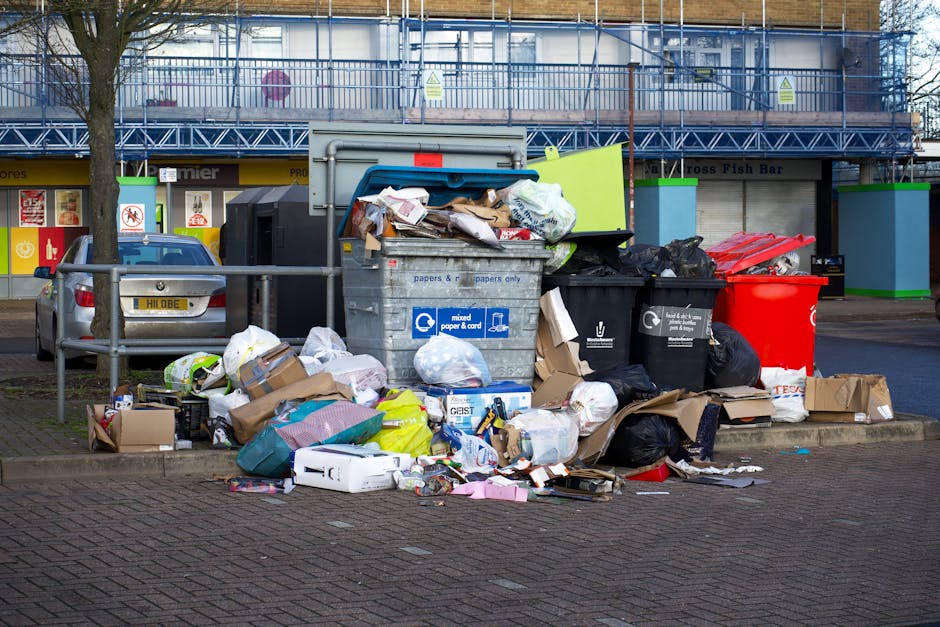
Kew Bridge estate rubbish clearance guide
If you live, work, manage a flat, or help maintain a property around Kew Bridge estate, rubbish can pile up faster than you expect. One delivery day, one bit of DIY, one end-of-tenancy tidy-up, and suddenly there's a sofa in the hallway, broken shelving in the corner, and a small mountain of mixed waste that nobody wants to deal with. This Kew Bridge estate rubbish clearance guide walks you through the process in plain English: what counts as rubbish clearance, how it usually works, how to choose the right method, and how to avoid the small mistakes that turn a simple job into a long afternoon.
Truth be told, good clearance is less about "getting rid of stuff" and more about doing it properly. That means planning access, separating awkward items, keeping noise and disruption down, and making sure waste goes to the right place. If you want a clear, practical overview before booking anything, you're in the right spot.
Contents
- Why Kew Bridge estate rubbish clearance guide Matters
- How Kew Bridge estate rubbish clearance guide Works
- Key Benefits and Practical Advantages
- Who This Is For and When It Makes Sense
- Step-by-Step Guidance
- Expert Tips for Better Results
- Common Mistakes to Avoid
- Tools, Resources and Recommendations
- Law, Compliance, Standards, or Best Practice
- Options, Methods, or Comparison Table
- Case Study or Real-World Example
- Practical Checklist
- Conclusion
- Frequently Asked Questions
Why Kew Bridge estate rubbish clearance guide Matters
Kew Bridge estate rubbish clearance matters because shared living and busy local streets make waste harder to ignore. A bag left by a bin store, an old mattress leaning against a wall, or building debris in a courtyard can create a knock-on effect very quickly. It can block access, attract complaints, and make the whole place feel untidy. Nobody wants to be the person whose "I'll deal with it tomorrow" turns into three weeks of hassle.
There's also the practical side. Estates often have tighter access than a normal house on a quiet road. That can mean stairwells, limited parking, lift restrictions, concierge rules, timed access windows, and neighbours who would quite like to keep their evening peaceful. A proper clearance plan respects all that. It is not just about speed; it is about fitting the job to the environment.
In our experience, the people who get the best results are the ones who treat clearance as a small project rather than a last-minute chore. They sort what can stay, what must go, and what needs special handling. That simple mindset saves time, money, and a fair bit of frustration.
It also helps with trust. If you are arranging waste removal for a landlord, an estate agent, a resident association, or a business unit near the estate, you need to know the waste is being handled responsibly. Clear communication and documented good practice matter. They really do.
For heavier or more specific loads, some people also look at broader services such as general waste removal or more tailored options like house clearance and flat clearance. The right choice depends on the type of rubbish, the property layout, and how quickly you need the area cleared.
How Kew Bridge estate rubbish clearance guide Works
Rubbish clearance on or around an estate usually follows a fairly predictable pattern. First, you identify what needs removing. Then you decide whether the job is a simple collection, a same-day clearance, or a more involved removal that includes sorting, lifting, and loading. After that comes access planning, which sounds dull until you realise it can make or break the whole thing.
A typical clearance visit starts with a quick assessment of the load. Mixed household waste is usually straightforward. Furniture, white goods, builder's debris, and garden waste may need different handling. If the waste includes anything awkward, such as a fridge, mattress, or items that could be classified as hazardous, that changes the plan. Not dramatically, but enough to matter.
On an estate like Kew Bridge, access is often the biggest hidden factor. Can a vehicle get close enough? Is there a lift? Do you need to protect hallways? Are there time limits on loading? Even a short walk from flat to vehicle can affect labour time. It's one of those details people overlook until they're standing there with a wardrobe panel and a staircase. Bit of a reality check, that.
Clearance providers usually work by estimating the volume or type of waste, confirming what can be taken, and organising the collection window. If the job involves bulky furniture, you may want to compare furniture clearance and furniture disposal depending on whether you want items removed as part of a broader clearance or as a smaller targeted job.
For renovation waste, especially plasterboard, broken tiles, timber offcuts, and packaging, it can be more suitable to look at builders waste clearance. That tends to be a different kind of job from general household tidy-up, even if it all looks like "rubbish" at first glance.
Key Benefits and Practical Advantages
The biggest benefit of organised rubbish clearance is simple: you get your space back. But the real value goes deeper than that. A clear flat feels calmer. A clear bin store feels safer. A clear communal area is easier for everyone to use. Small things, yes, but they add up fast.
- Less disruption: Waste removed in one planned visit is easier on neighbours and building management.
- Better access: Hallways, entrances, and shared spaces stay usable.
- Cleaner finish: A proper clearance often leaves a neater result than dragging items down in stages.
- Time saved: You avoid multiple tip runs, lift calls, and the dreaded back-and-forth with vehicles.
- More reliable sorting: Reusable, recyclable, and non-recyclable items can be separated more sensibly.
There is also a psychological benefit people underestimate. Once the clutter is gone, decisions become easier. You can see the room properly again. You can measure. You can clean. You can breathe a little. That matters more than most people admit.
If sustainability is important to you, it is worth asking how waste is handled after collection. Some clients prefer to prioritise reuse and recycling wherever possible, which is one reason pages such as recycling and sustainability are useful reading before you book. Responsible disposal should never be treated as an afterthought.
Who This Is For and When It Makes Sense
This guide is for anyone dealing with rubbish clearance around Kew Bridge estate who wants a sensible, low-drama outcome. That includes residents in flats, landlords between tenancies, managing agents, office occupiers, tradespeople, and homeowners sorting out a garage, loft, or garden.
It makes sense if you have:
- bulky items that are awkward to move through shared spaces
- mixed rubbish after a move or refurb
- furniture that is too heavy or damaged to shift alone
- an overflowing storage area, loft, or garage
- builder's waste after repairs or decorating
- a short deadline before check-in, check-out, or inspection
It also makes sense if you simply do not want the stress of doing it all yourself. Let's face it, a lot of waste jobs are not difficult in theory; they are just annoying in practice. Carrying a broken wardrobe down stairs on a wet Tuesday is nobody's idea of fun.
For businesses or shared workspaces, a more formal approach is often better. A company may need business waste removal or office clearance, especially where there are documents, storage units, chairs, or old IT equipment mixed in with general rubbish. The same principle applies: know what you have, know what should happen to it, and do not leave the job half-finished.
Step-by-Step Guidance
Here is a practical way to approach the job without overcomplicating it.
- Walk the space. Check every room, cupboard, loft, balcony, cupboard-under-the-stairs, and bin store. People always find one more bag. Always.
- Separate the items. Put furniture, general rubbish, recyclable material, and specialist items into rough groups.
- Flag anything unusual. Fridges, freezers, paint tins, chemicals, mattresses, and electricals may need special handling.
- Check access. Measure doorways, note lift size, and think about parking or loading space.
- Decide the collection type. A small pickup, a full clearance, or a specialist service may suit the job better.
- Get a clear price structure. Ask what is included, such as labour, loading, disposal, and any extra handling.
- Prepare the area. Keep paths open, protect floors if needed, and move fragile items out of the way.
- Be present if possible. A five-minute check at the start can prevent a lot of confusion later.
- Confirm final sweep-up. The job should not end with loose bits left behind. Small stuff matters.
If the job is mostly bulky household items, a service like home clearance may be a better fit than piecemeal rubbish removal. For one-off furniture jobs, a more focused route may be enough. For mixed items, a broader clearance is often smoother.
A simple rule of thumb
If you think you'll need more than one car load, more than one person, or more than one trip, it is usually worth planning the clearance properly rather than improvising.
Expert Tips for Better Results
A few small decisions make a surprisingly big difference.
Tip 1: Group waste by handling difficulty, not just by room. One room's rubbish might include four bags, a radiator, a shelf, and a mirror. The mirror needs more care than the bags, and the radiator may need a different approach altogether.
Tip 2: Photograph the load before booking. This helps if you are getting a quote and avoids the awkward "actually, there's a bit more than I thought" moment. We have all seen that happen.
Tip 3: Protect shared areas in advance. A runner mat, cardboard layer, or simple protective covering can stop scuffs on hallways and stair edges. On newer buildings, that can save a lot of grief.
Tip 4: Be realistic about access time. Even a short carry can slow things down. If the lift is small or shared, add a little slack to the schedule. You will thank yourself later.
Tip 5: Handle awkward items separately. A mattress, sofa, or fridge is often better dealt with through a specific route. For example, mattress and sofa disposal and fridge and appliance removal are useful when the load includes single large items that need more than basic lifting.
Tip 6: Keep an eye on the end result. A good clearance is not only about what goes out. It is also about what is left behind: a usable room, a clean floor, and no stray bits tucked in a corner. That last 5% is where the difference shows.
Common Mistakes to Avoid
The biggest mistake is assuming all waste is the same. It isn't. A bag of old clothes, a broken freezer, and a pile of demolition rubble all have different handling needs. Treating them like one category can cause delays or extra cost.
Another common mistake is underestimating access. People say, "It's only a few stairs," and then realise the banister narrows the route, the lift is out of service, or the parking bay is further away than expected. Small details, big impact.
Here are a few others:
- Leaving sorting until collection day: That usually slows everything down.
- Forgetting about restricted items: Hazardous or specialist waste cannot just be bundled in with general rubbish.
- Not asking what is included in the price: Labour, loading, disposal, and extra item charges should be clear.
- Ignoring building rules: Estate management may have access times or noise rules.
- Trying to do too much alone: If something is heavy, awkward, or potentially dangerous, get help.
One more subtle mistake: clearing the obvious waste but leaving the smaller bits. Dust, packaging strips, screws, broken clips, and tiny offcuts can make a space look unfinished even after the bulk is gone. It is a tiny thing, but you notice it when the room is meant to be "done".
Tools, Resources and Recommendations
You do not need a huge toolkit for a rubbish clearance, but a few basics help.
- Heavy-duty sacks: Better for mixed light waste than thin supermarket bags that split halfway down the stairs.
- Gloves: Simple, practical, and worth it.
- Tape and labels: Handy if you are marking items to keep, donate, or remove.
- Measuring tape: Useful for checking whether bulky items can get through doors or lifts.
- Floor protection: Cardboard or similar protection can help in shared corridors.
- Camera phone: Good for photos before and after, and for quoting.
For related services, it helps to know whether the job is general, specific, or mixed. A few pages can be especially helpful when planning:
- loft clearance for stored items tucked away for years
- garage clearance for a space full of tools, boxes, and forgotten bits
- garden clearance for green waste and outdoor clutter
- builders waste clearance for renovation debris
If you want to understand acceptable waste categories before a collection, what can go in a skip is a helpful reference point, even if you are not hiring a skip. It can help you think more clearly about what needs separating.
Law, Compliance, Standards, or Best Practice
Waste disposal in the UK should always be treated carefully. You do not need to memorise legislation to get rid of a few old chairs, but you do need to understand the basics of responsible handling. That includes using a reputable waste carrier, keeping waste out of unauthorised places, and making sure anything hazardous is dealt with properly.
Good practice also means thinking about the waste hierarchy in plain terms: reduce what you throw away, reuse what can be reused, recycle what can be recycled, and dispose of the rest responsibly. That sounds obvious, but a lot of clearance jobs become simpler when you build the plan around those steps.
Special care is needed for:
- Electrical items: these may need separate treatment rather than mixed loading
- Fridges and freezers: they are bulky and often awkward
- Potentially hazardous materials: paint, chemicals, contaminated materials, and similar items should be handled cautiously
- Confidential paper records: these should not be tossed in with general waste if they contain personal or business data
If the clearance involves documents or private records, a service such as confidential shredding may be the sensible choice. For higher-risk items, it is always better to pause and check than to guess. That's just good sense.
For reassurance around business practices, insurance, and handling, some readers also like to review health and safety policy, insurance and safety, and payment and security. They help set expectations before any job begins.
Options, Methods, or Comparison Table
Different clearance methods suit different jobs. The right one depends on volume, urgency, access, and what is in the load. Here is a straightforward comparison.
| Method | Best for | Strengths | Watch-outs |
|---|---|---|---|
| DIY tip run | Very small, simple loads | Can feel cheaper upfront | Time-consuming, requires vehicle access, heavy lifting, multiple trips |
| Skip hire | Ongoing renovation or high-volume waste | Handy if waste will accumulate over several days | Needs space, permits may be relevant, not ideal for tight estate access |
| Man and van clearance | Mixed household or bulky waste | Flexible, fast, less lifting for you | Needs accurate description of the load |
| Specialist item removal | Fridges, sofas, mattresses, appliances | Tailored handling for awkward items | Best used when the waste is mostly one category |
| Full property clearance | Flats, houses, end-of-tenancy, inherited homes | Most comprehensive, good for mixed loads | Requires planning and clear item instructions |
For many estate-based jobs, a flexible clearance visit is the sweet spot. It keeps disruption low and avoids the hassle of managing a skip in a crowded or restricted location. If the waste is mainly domestic, flat clearance or house clearance is often more practical than trying to piece the job together yourself.
Case Study or Real-World Example
Here's a simple real-world style example. A resident on Kew Bridge estate had been gradually gathering items for months: a broken office chair, three bags of mixed rubbish, a small bookcase, an old microwave, and a mattress waiting in the spare room. Nothing dramatic on its own. Together, though, it had become the sort of clutter that makes a flat feel smaller every day.
The first step was to walk through the flat and separate everything into three groups: general rubbish, bulky furniture, and specialist items. The mattress and microwave were flagged early, which mattered because they needed different handling from the bags and the bookcase. Access was checked too. The lift was workable, but the corridor was narrow, so a plan was made to protect the route and keep movement efficient.
On the day, the load was removed in one visit. The hallway was left clear, the room felt brighter, and the resident could finally arrange furniture properly again. No drama, no repeated trips, no guessing whether the mattress would fit down the stairwell. Honestly, it was just a much calmer way to do the job.
That is the main lesson: once the waste is broken into sensible categories, the whole process becomes easier. What looked like a mess becomes a list. And a list is manageable.
Practical Checklist
Use this before you book or begin a clearance.
- Walk every room and storage area carefully
- Separate general rubbish from bulky items
- Identify mattresses, appliances, and other specialist waste
- Check access routes, stairs, lifts, and parking
- Measure awkward items if you are unsure about removal routes
- Take photos of the load for reference
- Confirm what is included in the quote
- Ask about recycling or reuse where relevant
- Keep shared hallways and communal areas protected
- Be available to answer last-minute questions on collection day
- Do a final sweep for small leftover bits
Quick takeaway: the smoother the preparation, the less stressful the clearance. That is usually the whole game.
Conclusion
A good Kew Bridge estate rubbish clearance guide is really about making a practical job feel simple. If you plan the access, separate the waste properly, and choose the right collection method, you can clear a flat, a home, or a communal problem load without turning it into a weekend project.
The best outcomes are usually the quiet ones. The hallway stays clear. The neighbours are not bothered. The room feels lighter. And you do not spend the evening looking at the pile and thinking, "I'll sort that tomorrow."
If you are weighing up the next step, start with a proper assessment of what needs removing and what kind of service fits the job best. You will often save more time than you expect, and sometimes a fair bit of money too.
Get a free quote today and see how much you can save.
Frequently Asked Questions
What is included in a Kew Bridge estate rubbish clearance guide?
It usually covers how to identify waste, plan access, choose the right removal method, handle bulky or specialist items, and avoid common mistakes when clearing a property or communal space.
Can rubbish be cleared from a flat on an estate with limited access?
Yes, but access needs to be planned carefully. Lifts, stairways, parking, and loading restrictions can all affect how the clearance is carried out, so it helps to check those details first.
What happens to the rubbish after collection?
That depends on the type of waste. Some items may be reused, some recycled, and some disposed of more traditionally. Good practice is to keep recyclable and specialist waste separate where possible.
Is furniture clearance the same as general rubbish removal?
Not quite. Furniture clearance often involves larger, heavier, and more awkward items, so it usually needs a different plan from a straightforward bag-and-box rubbish collection.
What should I do with a fridge, freezer, or other appliance?
Appliances are best treated as specialist items. They are bulky and can include materials that need separate handling, so it is better not to mix them with ordinary household rubbish.
Do I need to sort waste before booking a clearance?
It is not always essential, but it helps a lot. Sorting waste into broad groups makes quoting easier and often makes the collection faster on the day.
How do I know if I need house clearance or flat clearance?
If the job is for an entire flat or a multi-room property with mixed contents, flat clearance or house clearance is usually more suitable than a small item removal. The scale of the job is the key factor.
Can builders waste be taken from a renovation project near the estate?
Yes, but it should be identified separately from domestic rubbish. Construction debris, plasterboard, timber, and similar material often need a more specific clearance approach.
What is the safest way to handle heavy rubbish in a shared building?
Plan the route first, protect floors and corners, and avoid lifting anything that is too heavy or awkward for one person. Shared buildings reward good preparation more than speed.
Are mattresses and sofas handled differently from other waste?
Often, yes. They are bulky, difficult to manoeuvre, and may need a dedicated disposal method. That is why specialist pages for mattress and sofa disposal can be useful when planning the job.
What if I only have a small amount of rubbish?
Small loads can still benefit from a planned collection if they include awkward or heavy items. If it is just a few bags, a simpler removal may be enough. The key is matching the method to the load.
How far in advance should I arrange a rubbish clearance?
If the job is time-sensitive, book as early as you can. For routine clearances, a bit of notice gives you time to sort the waste, check access, and avoid rushed decisions on the day.
Can confidential papers be thrown away with household rubbish?
They should not be treated casually if they contain personal or business information. Confidential shredding is the safer route when paperwork needs secure disposal.
What makes a clearance service feel genuinely professional?
Clear communication, careful handling, tidy removal, sensible pricing, and respect for the property all matter. You usually notice professionalism in the small details first.