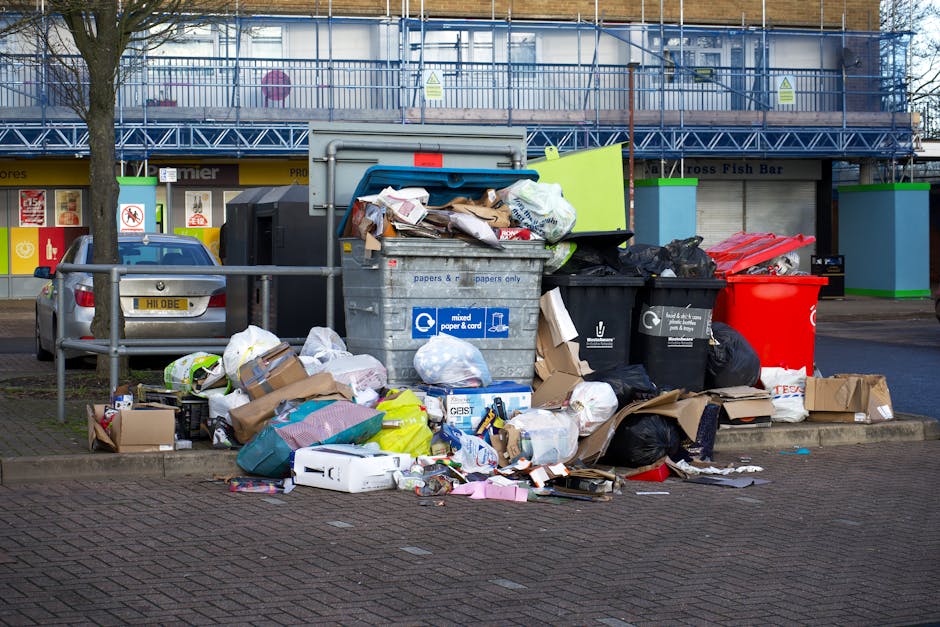
Commercial Waste Removal in Gunnersbury

Commercial waste removal in Gunnersbury needs a service that is organised, careful and straightforward to work with. We collect mixed business waste, bulky office items and common non-hazardous workplace rubbish, helping local firms keep premises clear without turning disposal into a disruption. The focus is on practical removal, sensible sorting and a clean handover, whether the load comes from day-to-day operations, a move, a refurbishment or a one-off clear-out.
Our work covers a broad mix of commercial items, including desks, chairs, filing units, packaging, general rubbish and redundant fixtures. We can also support businesses that need office clearance as part of a larger disposal plan, where furniture and loose materials are removed together rather than handled in separate visits. That helps keep the process orderly and reduces the amount of time spent juggling different collections.
For businesses comparing options, it is sensible to think about what must leave the site, what can be separated for recycling and which items may need specialist handling. The right service should make those decisions easier, not more complicated. Clear communication, access that is easy to manage and a sensible description of the load all help the collection run smoothly. If you are planning a workplace clearance, you can ask for a quotation once you have a basic outline of the items involved.
Business rubbish collections and workplace clearances
Commercial waste removal is not only about moving items away; it is also about matching the collection to the way the business operates. Some sites need regular removal of bagged rubbish, while others only need help when storage rooms, work areas or back offices have built up unwanted material. We handle collections that may include paper waste, broken equipment, office fixtures and general refuse, with an emphasis on keeping the removal process orderly from the start.
Where a business has a wider clean-up project, business waste removal can suit premises that generate mixed non-domestic waste and need a practical, single-point clearance. In many cases, the job is easier when items are grouped by type, but that does not mean the customer has to do the sorting alone. The main aim is to remove what is no longer required and leave the site ready for its next use, whether that is a refit, a handover or normal trading.
Commercial waste can come from many different settings, so the service must stay flexible without becoming vague. Offices may need desks and chairs removed; shops may have shelving, packaging and display fixtures; small trade premises may have accumulated offcuts and damaged stock. A sensible provider will focus on the actual load rather than forcing the job into a narrow category. That is especially helpful when items need to be cleared from a busy premises with limited time or access.
What can be included in a workplace clearance

Many commercial loads contain more than one type of item, so the removal plan needs to be broad enough to deal with the full mix. Typical items may include office chairs, cabinets, shelving, packaging waste, cardboard, loose fixtures, non-hazardous electrical items and damaged storage units. If the work involves a larger clear-out, waste removal can provide a general route for mixed rubbish that does not fit neatly into a single furniture or office category.
Some businesses also need specific item disposal rather than a general clear-up. For example, unwanted desks, tables and seating can be grouped into a dedicated collection, while damaged white goods or similar objects may need a separate plan. A useful service will distinguish between ordinary recyclable material and items that need a more careful route. It should also avoid creating unnecessary steps for the customer where a combined collection is more efficient.
To make a quotation easier to prepare, it helps to give a simple summary of the items and access. The most useful details are usually the type of waste, approximate volume and where it is stored. A short list is often enough:
- what needs removing
- whether the waste is loose, bagged or stacked
- any access limits such as stairs, narrow entrances or restricted loading space
- the preferred timing for the collection
Office furniture and equipment disposal
Office environments often generate a mixture of furniture and equipment that is awkward to manage in ordinary bins. Desks, chairs, pedestals, filing cabinets and shelving may all need to leave at once, especially during reorganisation or closure. Our approach is to remove these items in a way that fits the premises, so the business can keep working around the collection rather than stopping everything to deal with waste.
If the job centres on furnishings rather than general rubbish, furniture clearance is a useful option for larger or mixed furniture loads, while a more item-specific route may suit businesses disposing of redundant pieces in stages. We can also help with furniture disposal where the load includes worn, broken or no-longer-needed items that should be taken away as part of a tidy, responsible handover.
It is worth separating furniture that can be moved easily from items that are bulky, fixed or awkwardly placed. That does not always mean the customer must dismantle anything; rather, it helps to identify what may need extra handling. Good planning keeps the collection safe and efficient. It also reduces the risk of last-minute uncertainty, especially when the work is happening in a live office or a shared commercial building.
Collections for storage rooms, garages and overflow areas

Commercial waste often gathers in overlooked spaces before it becomes obvious that a clearance is needed. Storage rooms, basements, garages and spare offices can hold broken stock, redundant displays, archived materials and old fixtures that are taking up room. A clearance in these areas should be treated as a proper disposal task, not just a quick tidying exercise, because the load may be mixed and may need careful sorting.
Where the waste comes from an outbuilding or storage space, garage clearance can be a practical match for premises with accumulated items that are no longer useful. For businesses with more domestic-style clutter in staff or mixed-use spaces, home clearance may be relevant only where the property type genuinely fits, but the key point remains the same: the collection should be planned around the actual contents, not a generic waste label.
In these spaces, access and stacking matter as much as the waste itself. Items packed tightly into corners can take longer to remove, while mixed loads may need to be separated on site. A clear description at the enquiry stage makes it easier to match the right vehicle, workforce and disposal route. That is especially useful when the clearance must happen before a lease change, refurbishment or inspection.
Clearance options for different item types
Commercial premises rarely produce one type of waste in isolation. A business may need furniture taken away alongside office equipment, cardboard, shelving and a small amount of general rubbish. The service should be able to deal with that combination without turning it into a series of separate jobs. That flexibility is especially useful when the space is being reset quickly and the client wants one clear collection plan.
For bulkier household-style items used in commercial settings, mattress and sofa disposal can be relevant where a property, serviced accommodation or staff area contains furnishings that are no longer required. Likewise, fridge and appliance removal may suit kitchens, break rooms or hospitality spaces that need redundant appliances taken away carefully and in line with the item type.
Not every business clear-out is large, but even a modest load can include objects that are awkward to move or sort. The important thing is to avoid overcomplicating the process. A single collection can often cover the main waste categories if they are described accurately at the outset. That keeps the job efficient while still allowing for the different disposal routes that certain items may require.
How pricing and quotation details are usually shaped

Quotation details for commercial waste removal are generally shaped by the amount of waste, the kind of items involved and the difficulty of access. A load of loose bags in an accessible yard will usually be simpler to plan than bulky furniture from an upper floor or a store room with tight access. The right quotation should reflect the actual work needed, not rely on guesswork about what may be involved.
Some customers prefer to look at pricing and quotes before they proceed, especially when they are comparing disposal options across different parts of a project. That is sensible, because commercial clearances are often tied to deadlines, fit-out schedules or tenancy arrangements. Clear information about the load helps keep the discussion focused on practical details rather than broad assumptions.
If you are preparing for a collection, it can help to note whether items are spread across several rooms or stored in one place, whether anything is especially heavy and whether there are any site rules to work around. Photographs are useful, but they should support a basic written description rather than replace it. In many cases, a concise list of the main items is enough to start the quotation process.
About Gunnersbury
Gunnersbury lies in west London and is best known for the sweep of its historic parkland and for the way it sits between larger urban centres in the boroughs around it. The area takes its name from the old estate once associated with Gunter and later shaped by the Rothschild family, whose ownership left a long architectural and landscape legacy. Gunnersbury Park remains the most prominent green space in the district, with open grounds, formal elements and restored heritage buildings that reflect the site’s layered history. Nearby, the area is close to the River Thames corridor and the transport links that have long connected west London to the city centre and beyond. The Overground and Underground connections at Gunnersbury station, together with road routes through Chiswick and Acton, place the neighbourhood within a busy commuter and residential landscape. Much of the local character comes from this contrast: older estate history and parkland on one side, and dense modern London movement on the other. Buildings around the area include terraces, interwar development and later commercial premises, while the wider surroundings hold a mixture of residential streets, local services and business spaces. The park itself is also a venue for events and informal recreation, making it one of the strongest shared landmarks in the area. As a place, Gunnersbury combines heritage, transport and everyday urban life in a way that is distinctly west London.
Commercial clearances for refurbishment and moving projects
When a business is changing layout, renewing fittings or handing back a site, waste often appears all at once. Desks, screens, shelving, packaging and dismantled fixtures can build up quickly during a move or refurbishment, and the main challenge is usually not just disposal but timing. A well-managed collection fits around contractors, staff and access arrangements so that the site can keep moving towards the next phase.
For projects where the clearance is part of a larger building or strip-out task, builders waste clearance may be relevant if the load includes renovation debris as well as furniture and fittings. Where disposal involves premises rather than a single room, house clearance can be useful only for genuine property clearances, while our commercial focus remains on business settings and the non-domestic waste they produce.
These jobs are often easiest when the items that must stay are clearly separated from the items that can go. That does not require a perfect setup, but it does help to mark out priority areas and identify anything that is fragile, fixed or unusually heavy. A practical collection should reduce disruption rather than add to it, leaving the premises ready for cleaning, inspection or the next stage of work.
Sorting, recycling and special waste considerations

Commercial waste removal is not just about carrying items out of a building. Sorting plays an important part, because business loads often contain materials that are handled differently once they leave the site. Cardboard, metal, wood, furniture and general rubbish may need different disposal routes, and a careful service should make room for that without burdening the customer with technical steps.
Where a business is concerned about the handling of confidential or sensitive materials, it may need a separate disposal route for documents rather than a general rubbish collection. In that situation, confidential shredding can be a better fit than mixing papers into a larger clearance. For items that need extra care because of their composition, a specialist route is more appropriate than a standard mixed-waste collection.
Some waste types should not be treated as ordinary commercial rubbish. Items that may be hazardous, contaminated or otherwise restricted need their own process, and businesses should avoid placing them in a general collection unless that route is clearly suitable. If you have such material, the safest approach is to identify it early and ask whether it belongs in a dedicated service. That keeps the main clearance simpler and helps ensure the waste is handled in the right way. For straightforward commercial loads, a clear description, a sensible collection plan and a prompt quotation request are usually enough to move things forward. Contact us to request a quotation for commercial waste removal in Gunnersbury.